


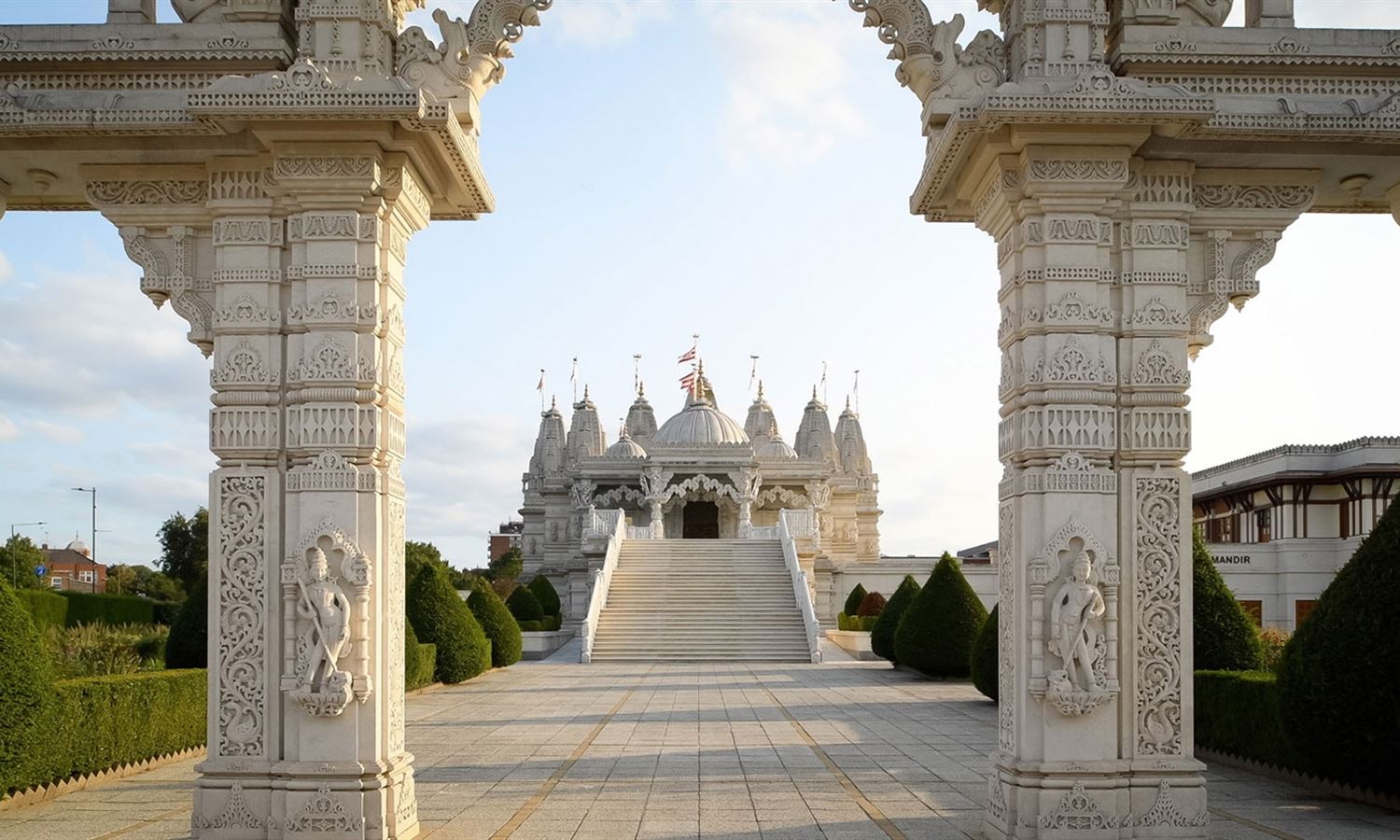
The next Open House London documentary offers a glimpse of Neasden Temple Filmed by Jim Stephenson, a place of worship in northwest London that was built using ancient Hindu texts and 26,000 pieces of stone.
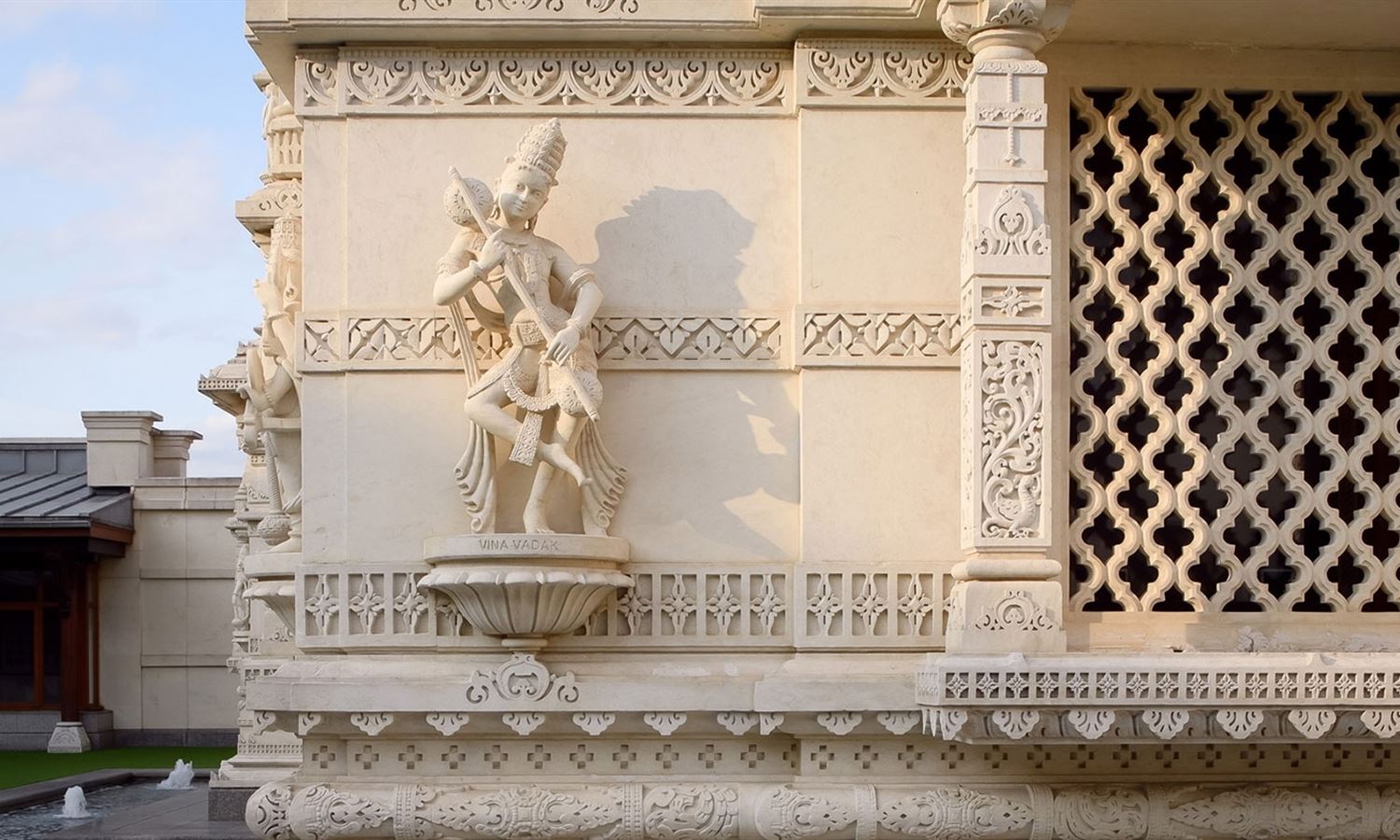
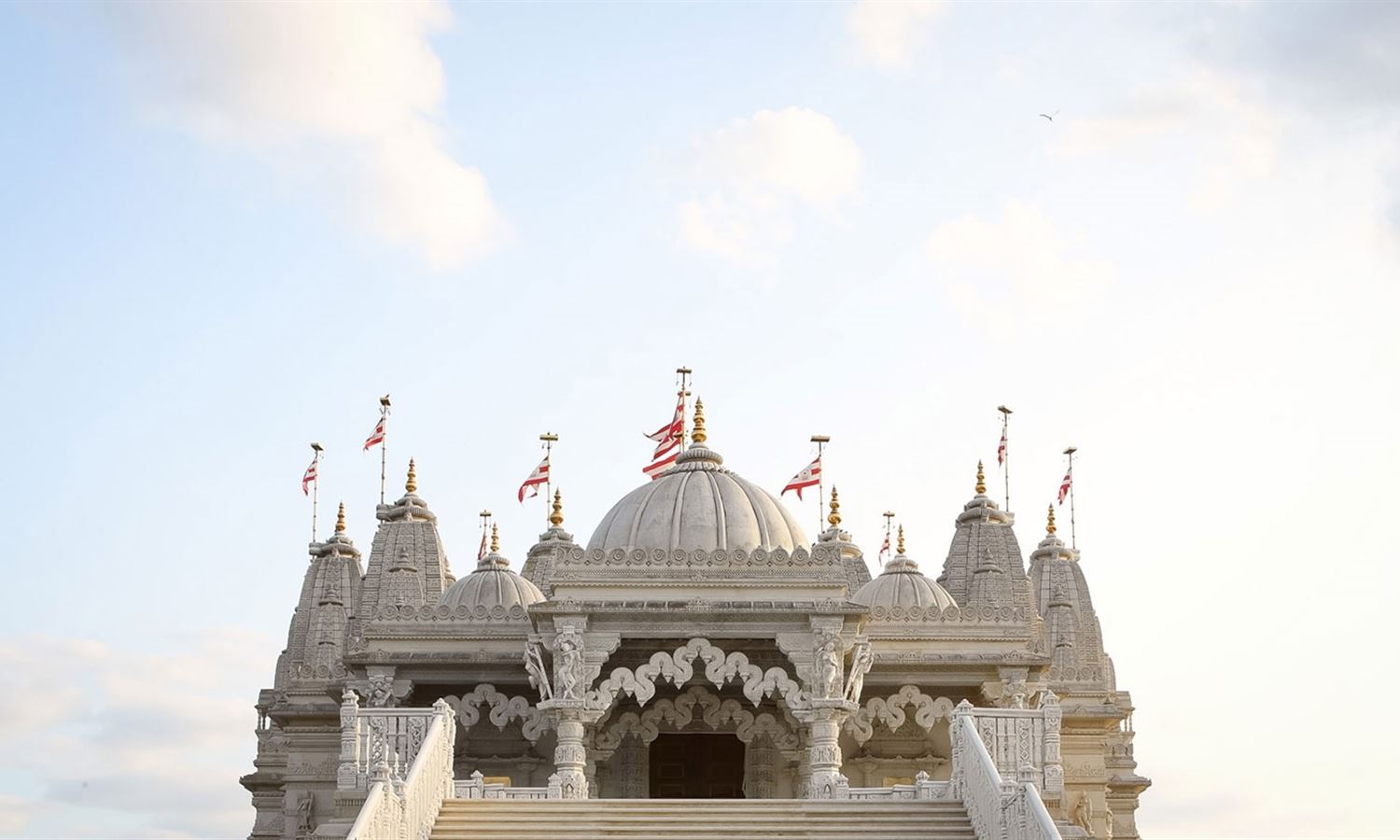
The temple was built with over 5000 tonnes of Bulgarian limestone and Italian Carrara marble, hand-carved in India by 1500 artisans. The 26,000 pieces of finished stone carvings were then sent to the UK to be assembled on-site by more than 3000 volunteers, without any reinforcing iron or steel.
In the video, tour guide and head monk Yogvivekdas Swami explains the story of the temple's design, which was dictated by ancient texts called the Vastu Shastra.
The Vastu Shastra, which translates as "science of architecture", is a traditional Indian system of architecture that incorporates traditional Hindu beliefs and has informed the design of mandirs since 1500 BCE.
This means every detail of the temple's structure is intertwined with the traditions of the faith, beginning from the site selection right through to the final plans and materiality.
Elements of the temple are also designed to represent parts of God's physical body, such as the Kalash, a set of golden gilded urns, and overhead flags that symbolize the head and hair of God respectively.
Source: Lizzie Crook