


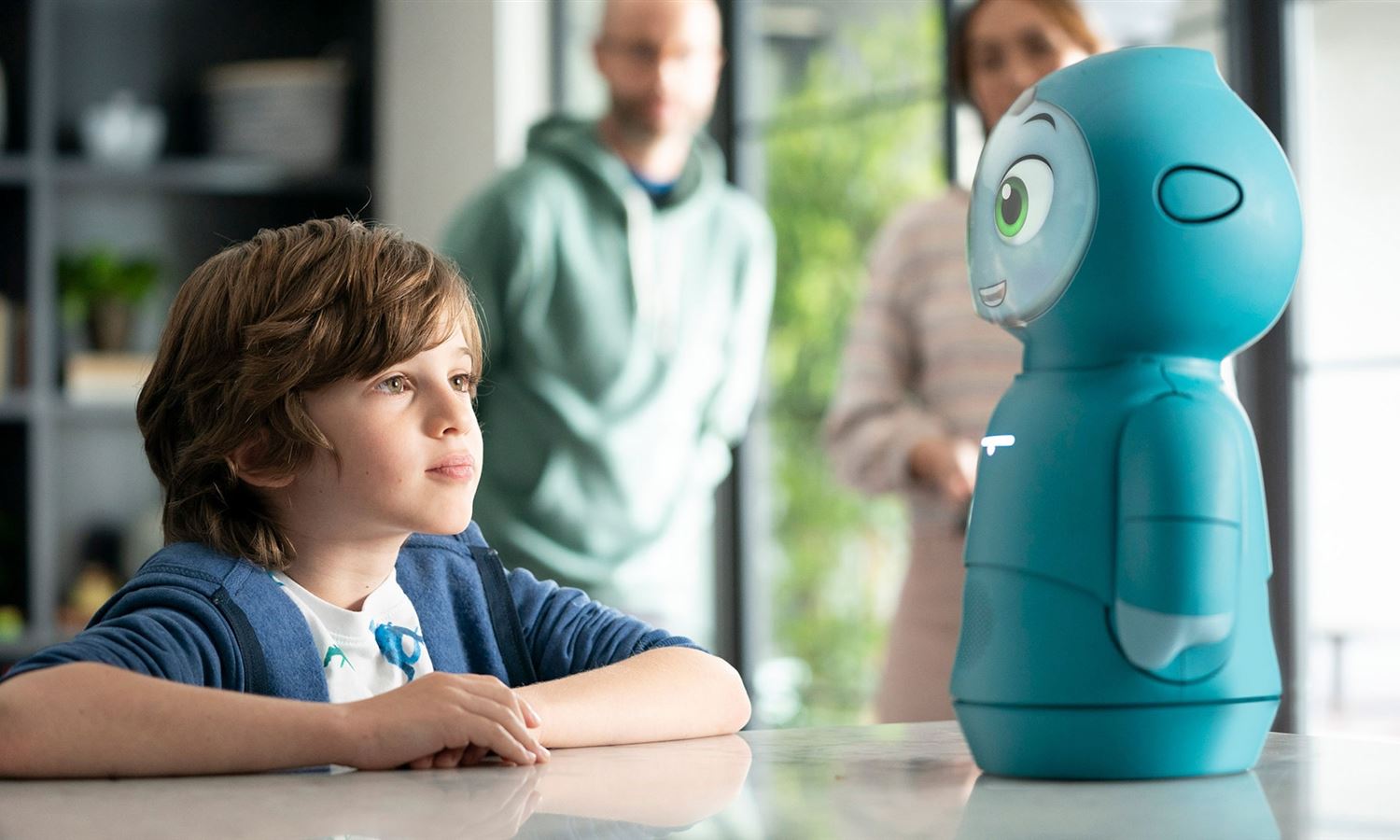
The robot, called Moxie, is an "animate companion" designed to help children between the age of five and 10 develop their social, emotional and cognitive skills through play-based learning.
And he was designed to be "tall enough to be of interest without being unwieldy", measuring at just under 40 centimetres in height.
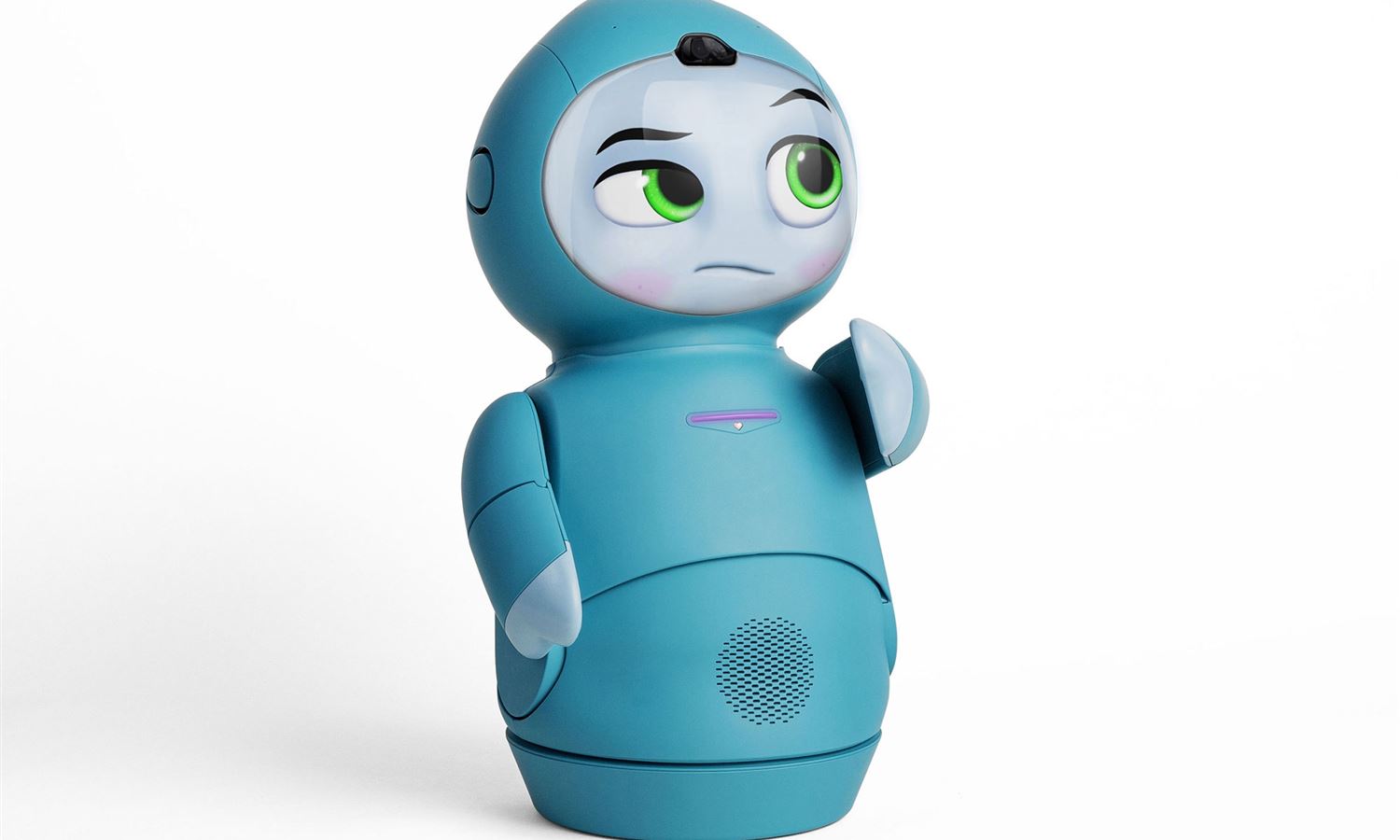
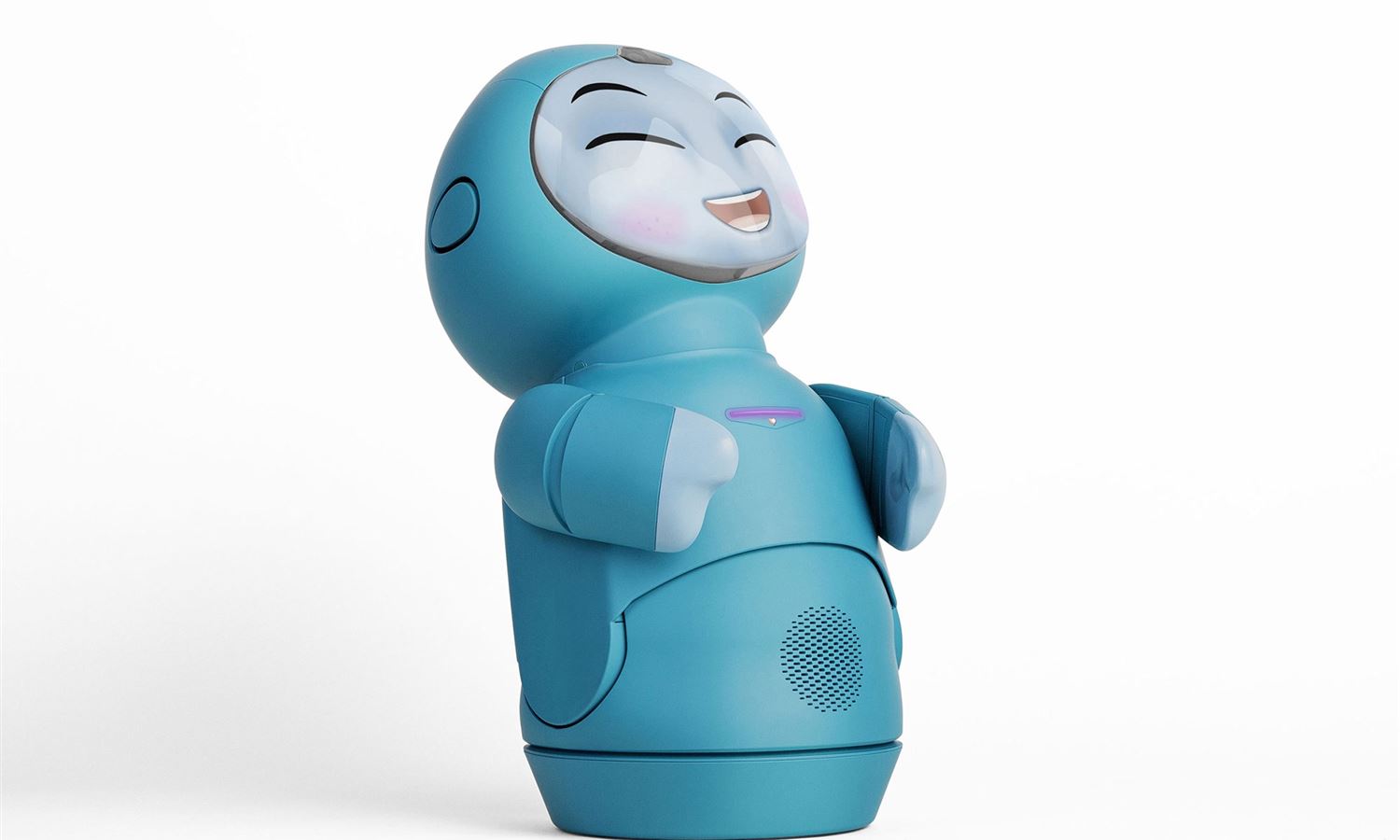
The design team created a face for the robot that is without specific details like wrinkles and shadows to make it easier to express feelings such as interest or worry.
They also gave Moxie large and "friendly" eyes to enable children to better recognise certain emotions, and a soft, smooth body coloured in a "gender-neutral" teal hue.
Other features designed to be "endearing" are the robot's teardrop-shaped ears, its round, helmet-like face and its hands, which have a simplified form with a pointed but rounded index finger and a thumb on the inside.
Moxie can turn 360-degrees on its base in reaction to the child, as well as bending at the neck, stomach, and base to help express emotions.
A camera embedded in the robot's forehead allows it to see child, while a speaker integrated in its lower body enables it to speak. A coloured bar on its chest also shows its battery life.
Its machine-learning capabilities means it can learn more about the child as it goes, better personalising its content to assist the child's learning goals.
It can also recognise and remember people, places and things. According to the tech company, this creates a sense of trust and empathy with the user, and encourages a deeper engagement with the robot.
The robot is programmed to teach a different "life skill" each week, including kindness, friendship, empathy and respect.
It does so through activities such as drawing, breathing exercises and meditation, problem-solving and reading. It also teaches the child to make eye contact, take turns with others, listen and to express empathy.
Source: Natashah Hitti